During the 2026 lacquer tapping season, the average income of cooperative member households increased significantly; the quality of raw lacquer passed third-party testing, and urushiol content remained at a leading level in the industry.
A hundred li and a thousand cuts for one jin of lacquer
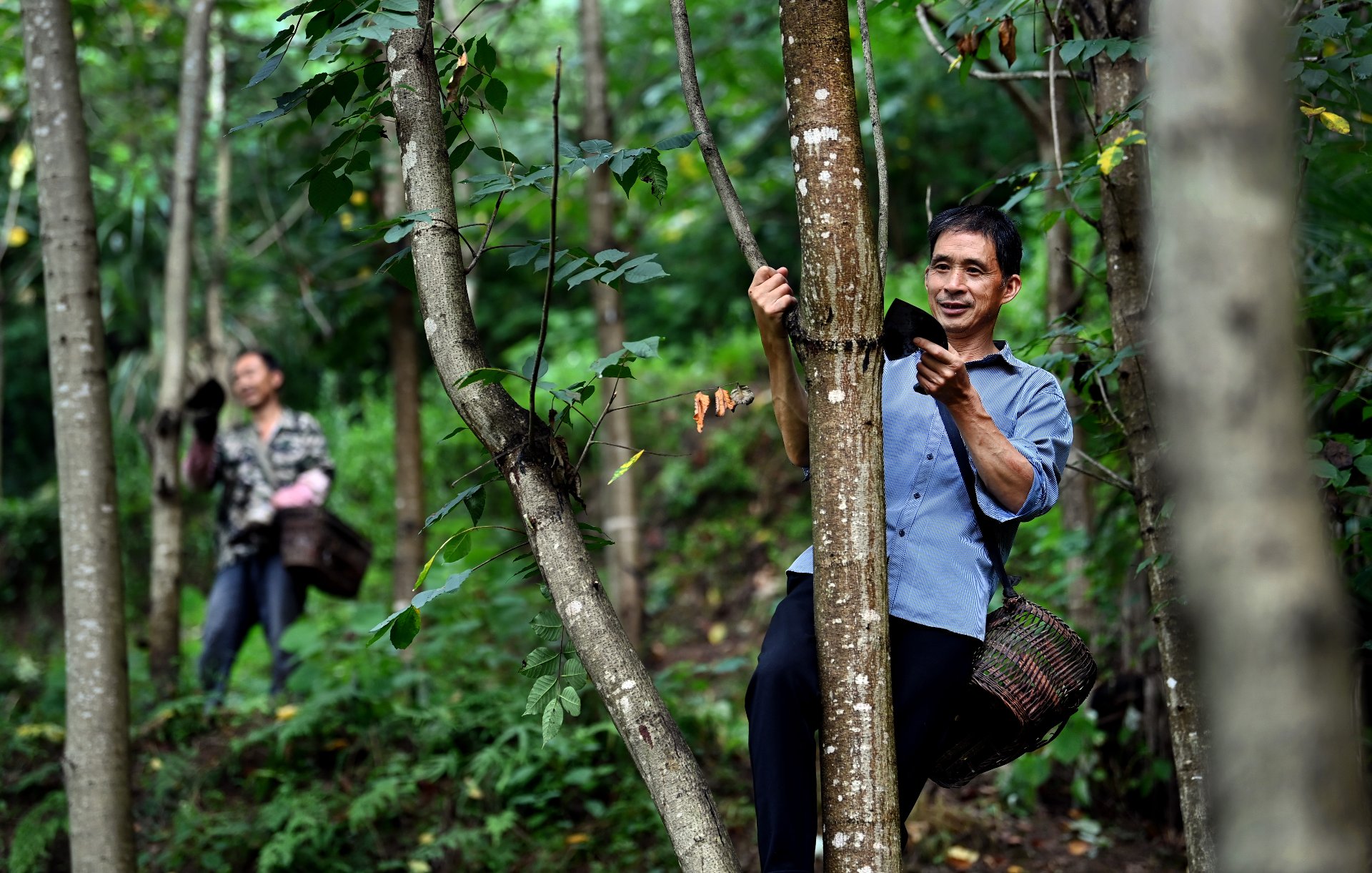
Lacquer tapping is work that tests both patience and a sense of season. After summer begins each year, lacquer farmers go into the mountains in the early morning or at dusk, cut tapping openings at specific angles into the lacquer trees, and wait for the raw lacquer to seep out slowly, collecting it drop by drop. One jin of raw lacquer often means walking a hundred li of mountain paths and making a thousand cuts — which is why natural Chinese lacquer is so precious.
Behind the record-high output
The increase in output is no accident. In recent years, the company has worked with experts from institutions such as Northwest A&F University to continuously advance lacquer tree variety improvement and pest and disease control, and through the 'company + cooperative + lacquer farmer' model has provided lacquer farmers with saplings, funding and technical training, steadily improving grove management and the lacquer yield per tree.
Quality that stands up to testing
This season's raw lacquer has been sent to a third-party institution for testing; core indicators such as urushiol content remain at a leading level in the industry, providing a raw material guarantee for the stable quality of refined lacquer and lacquerware products. The test results are also incorporated into the product traceability system and can be viewed by customers through the QR code on the packaging.
Sharing the dividends of the industry with lacquer farmers
As output and quality rise together, the average income of cooperative member households has increased significantly. The company will continue to improve its guaranteed-price purchase and skill grading mechanisms so that those who 'live by their lacquer trees' truly benefit.