
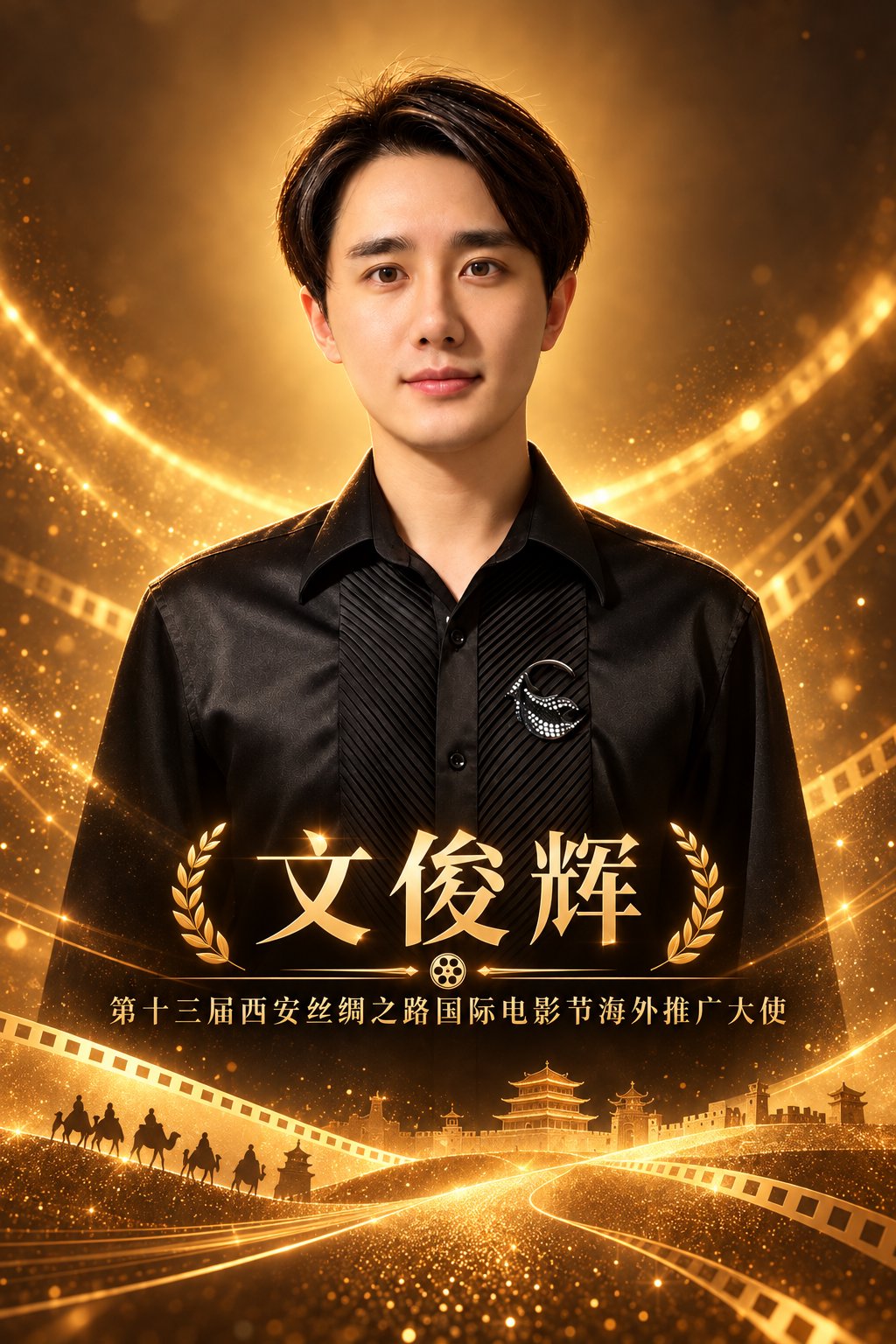
The 13th Silk Road International Film Festival was held in Xi'an. With drift-lacquer workwear and the 'Light on the Silk Road' lacquer brooch, Zhengdaming answered the spirit of the Silk Road in the language of Chinese lacquer, bringing intangible cultural heritage into a dialogue between East and West on an international stage.
The name of the Silk Road International Film Festival contains two ancient threads: a geographical Silk Road connecting East and West, and a road of art in light and shadow connecting reality and imagination. With the 13th Festival held in Xi'an, Zhengdaming — a lacquer house founded in 1925, and a designated supplier of this year's Festival — used lacquer as its medium and, through drift-lacquer workwear and the 'Light on the Silk Road' lacquer brooch, left an Eastern aesthetic footnote where those two threads cross.
Chang’an: Starting Point of the Silk Road, and a Home of Lacquer
Xi'an was the starting point of the ancient Silk Road and a window through which Chinese civilisation spoke with the world. Not far away, in the Qinba mountains, Zhengdaming tends more than 5,000 mu of lacquer groves, continuing the ancient tapping tradition of 'a hundred li and a thousand cuts for one jin of lacquer'. From a lacquer tree to a finished lacquer object runs a long sequence: planting, tapping, refining, coating, grinding. For that journey to continue out of Chang'an and into the world, cultural symbols must be translated and an international stage must be found. The Silk Road International Film Festival offered exactly that opportunity.
Phoenix and Light: An Eastern Symbol in International Language
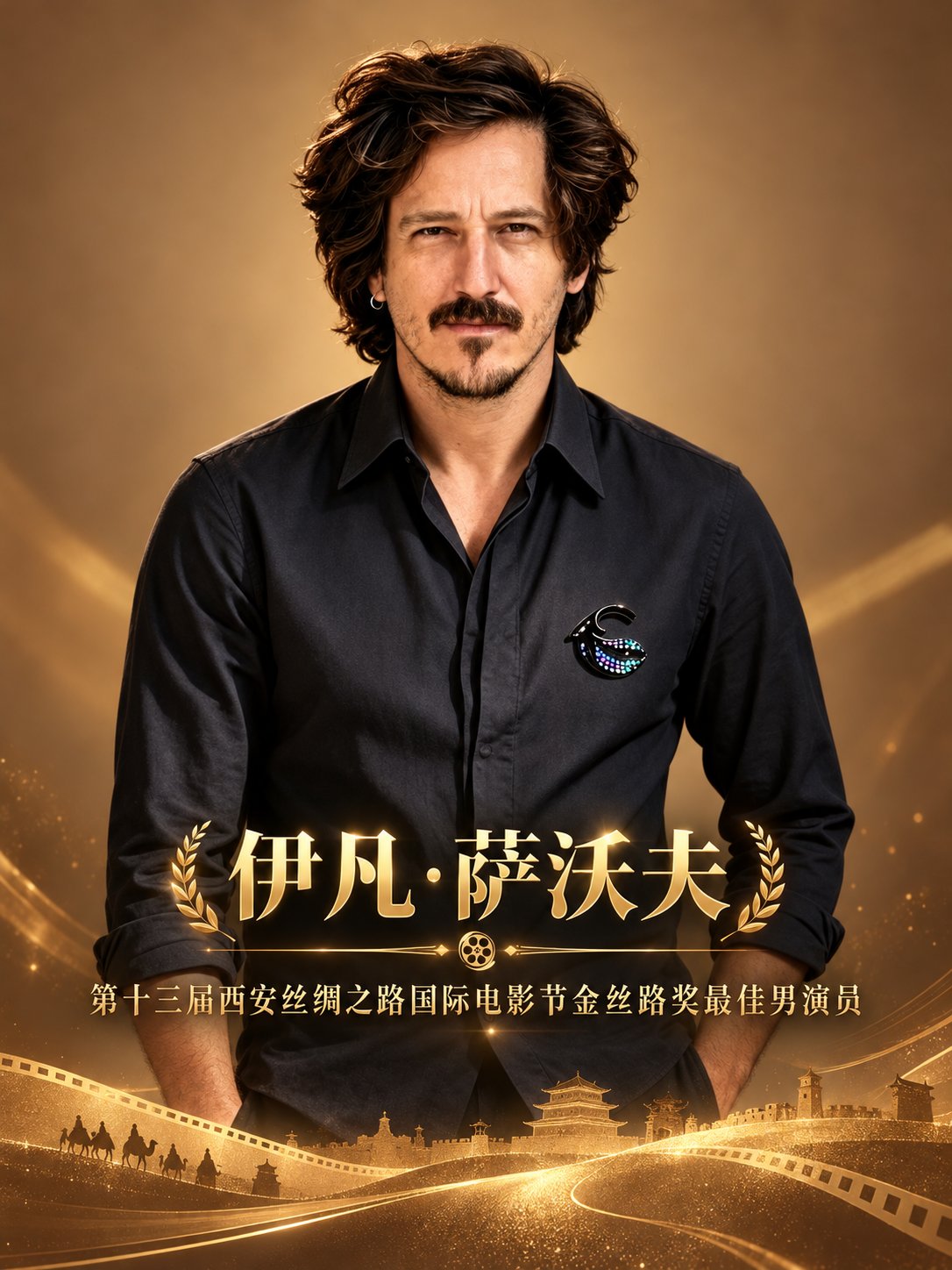
The 'Light on the Silk Road' brooch takes the phoenix as its form. In Chinese culture the phoenix stands for auspiciousness, rebirth and guidance; rendered in mother-of-pearl and lacquer, it also carries the warm, deep, flowing quality of Eastern materials. The head turning back is a civilisation looking back; the tail spreading is the Silk Road extending; the circle it closes is exchange and fusion. Worn on the chest of international film professionals, these meanings need no explanation — the visual itself is the dialogue.
The brooch is minute: a brass body beneath natural lacquer, about 0.8 cm thick and roughly 5.5 cm by 4.5 cm. To complete multiple coats of lacquer, mother-of-pearl inlay and hand polishing within such a tiny compass depends entirely on the artisan's touch — a fraction of a millimetre off, and the piece is lost.
The Jury President, the Overseas Promotion Ambassador and the Best Actor were among the guests who wore the brooch in the official posters, making it part of the Festival's visual system. It is at once a symbol of honour and a token of culture; a high point for Chinese intangible cultural heritage craft, and the Silk Road spirit made material in the present day.
For Intangible Heritage to Reach the World, It Must Be Used
For a long time, lacquer craft has been placed in display cases and museums, treated as a tradition that 'needs protecting'. Zhengdaming has always believed that the true vitality of intangible cultural heritage lies in being used, worn and carried into contemporary life. This collaboration with the Silk Road International Film Festival put that belief into practice: the workwear is on the staff, the brooch is on the guests' chests — lacquer is no longer a static exhibit, but a flowing, participating, contemporary language in dialogue with the world.
From a Brooch to a Vessel: Zhengdaming Lacquerware in Everyday Life
A brooch is the smallest piece the lacquer craft produces; most of Zhengdaming's lacquer settles on vessels — flower vases, tableware, ornaments, tea ware. Coat after coat is applied over wood, cloth or clay bodies, then ground and polished, until a 'sunken light' emerges: unassuming at first sight, yet brighter and clearer the longer it is used. Both the lacquer and the bodies come from Zhengdaming's own system: the lacquer groves of the Qinba mountains supply the raw lacquer, and its own workshops refine and apply it, so every object can be traced back to its tree and its maker.
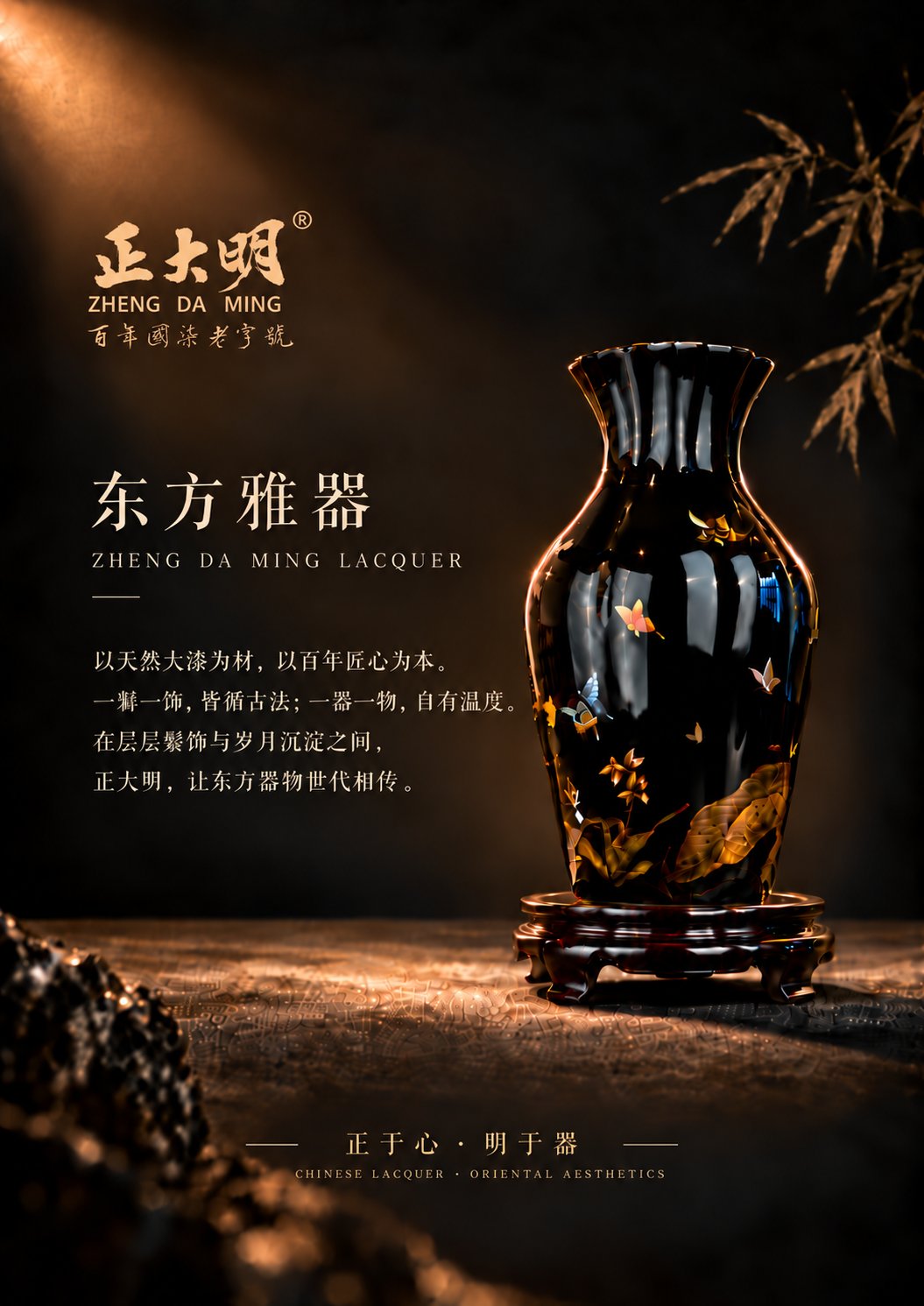
At an international event such as the Festival, the brooch and the workwear are the lacquer most easily seen; over the longer run, it is these vessels that carry lacquer back into daily life — a flower in a vase, tea in a cup, an object on a desk. The true continuation of intangible cultural heritage happens on every day it is used.
From Chang'an to the Silk Road, from the lacquer groves to the light of the Festival, Zhengdaming completed a handshake between Eastern aesthetics and international culture with one brooch and one garment. It is the contemporary turn of a century-old lacquer house, and a gentle but firm departure of Chinese intangible cultural heritage toward the world.